
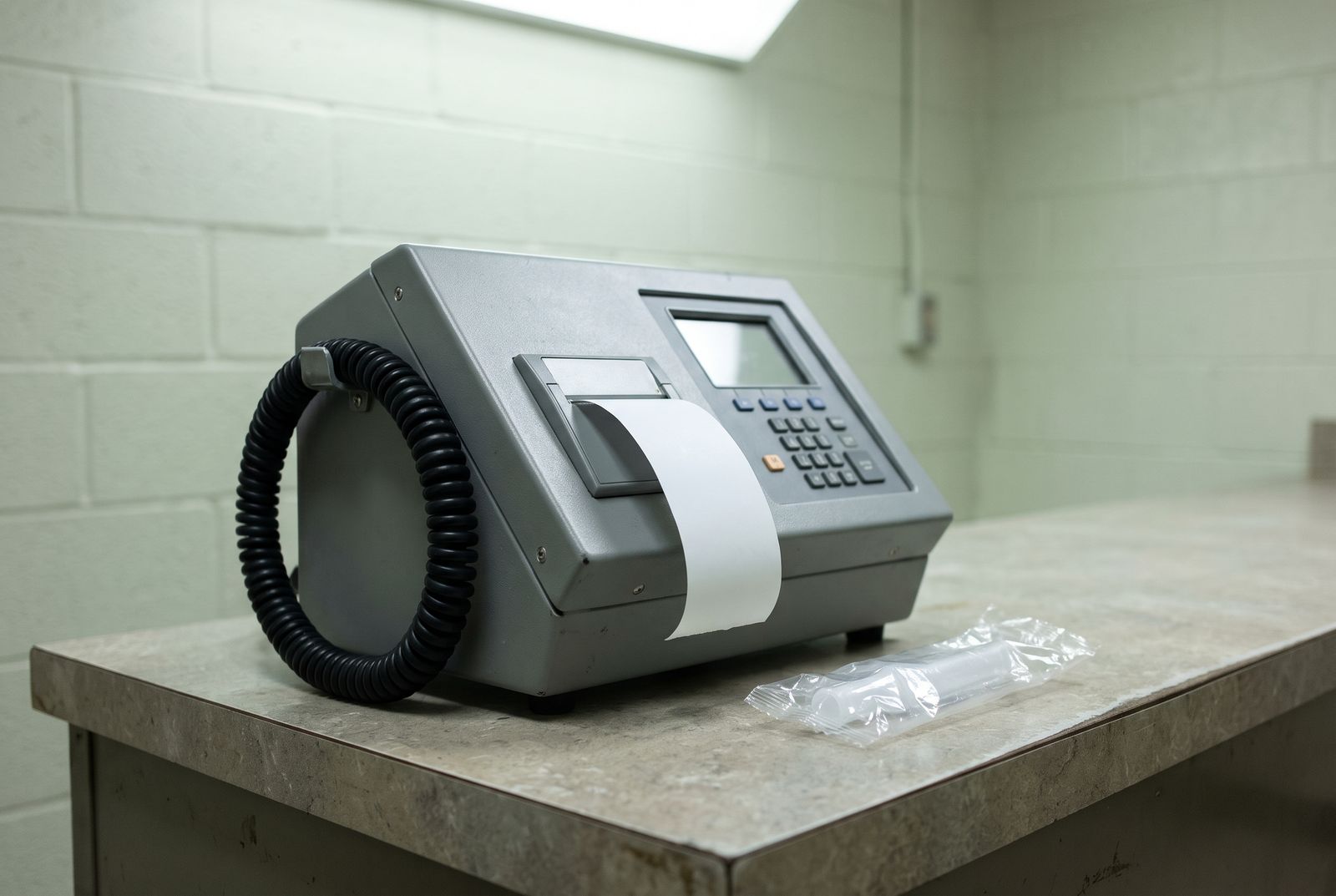
What "Express Consent" Means Under Colorado Law
The Colorado express consent law, C.R.S. 42-4-1301.1, starts from a simple premise: a person who drives a motor vehicle anywhere in the state is deemed to have consented to testing of their breath or blood for alcohol or drugs. That consent is triggered when a law enforcement officer has probable cause to believe the person was driving in violation of the DUI or DWAI provisions of C.R.S. 42-4-1301.
"Deemed" is the important word. The law treats consent as given by the act of driving, so a later refusal is not a withdrawal of something optional. It is treated as a breach of a condition attached to the driving privilege, and the consequences flow mainly through the license system.
Statute note
This page explains what the statute says so readers understand the system. It is not guidance on what anyone should do at a traffic stop. Decisions in a specific situation belong with the person and, where possible, a licensed Colorado attorney.
Breath or Blood: How the Test Is Chosen
For a suspected alcohol-only case, the statute generally lets the driver elect a breath test or a blood test. The chosen test is expected to be completed within two hours of driving, which ties back to the two-hour language of the DUI per se offense. There are exceptions: for example, when the driver is unable to complete the chosen test because of injury or medical treatment, or when the testing equipment or personnel for that test are not available within the time limit.
Drugs change the picture. When the officer has probable cause to believe the driver is under the influence of one or more drugs, the statute allows the officer to require a blood test. A driver who has already given a breath sample can also be asked for blood if drugs are suspected. The Colorado drug DUI and THC guide explains why blood dominates those cases.
Roadside screening is a different thing
Colorado treats a preliminary breath screening device used at the roadside differently from the evidential test given later at a station, hospital or testing van. The statute sets separate rules for preliminary screening, and its results are used for different purposes. Readers often assume the two are the same test; they are not, and the distinction is worth raising with a lawyer when reviewing a report.
What a Refusal Sets in Motion
A refusal does not end a DUI investigation. Under Colorado law it starts several things at once:
- Administrative revocation. The DMV can revoke the license under C.R.S. 42-2-126 for refusal, on a separate track from any criminal case. The license revocation guide covers that process.
- Evidence at trial. The statute allows a refusal to be admitted in the criminal case. A prosecutor can ask a jury to consider why a test was refused.
- Persistent drunk driver status. Colorado's definition of a persistent drunk driver in C.R.S. 42-1-102 includes a person who refuses testing. That status brings licensing conditions such as ignition interlock and alcohol education and therapy.
Officers can also seek a warrant for a blood draw in some situations, and courts have addressed when a forced draw is allowed. That is constitutional territory well beyond a plain-language guide, and a good reason to talk to a lawyer about any refusal case.
Refusal revocation periods by count
1 yearrevocation
The period most often cited for a first refusal. Early reinstatement with an ignition interlock may become available after part of the period, on conditions the DMV sets, including persistent drunk driver requirements.
2 yearsrevocation
For a second refusal. Interlock and alcohol education conditions apply to any reinstatement, and a longer interlock period is typical.
3 yearsrevocation
For a third or later refusal. Reinstatement conditions are the strictest in this group.
Verify Commonly cited periods under C.R.S. 42-2-126. The DMV notice and the current statute control.
| Issue | Test taken, result 0.08 or more | Test refused |
|---|---|---|
| DMV action | Administrative revocation for excess BAC | Administrative revocation for refusal, usually longer |
| Criminal case | Result is evidence; per se count possible | Refusal itself can be admitted as evidence |
| Persistent drunk driver | Only if the result is 0.15 or more, or by prior history | Yes, by definition |
| Interlock on reinstatement | Often a route to early reinstatement | Required for reinstatement in most cases |
Which Statute Governs Which Part
- Driving in Colorado carries deemed consent to a breath or blood test on probable cause.
- Alcohol-only cases usually allow a choice of breath or blood; suspected drugs mean blood.
- A refusal brings its own revocation, can be used at trial, and triggers persistent drunk driver conditions.
- Roadside screening and the evidential test are governed by different rules.
Verify Colorado amends its DUI statutes often. Check the current text of C.R.S. 42-4-1301.1 and 42-2-126 on the Colorado General Assembly site and ask a licensed Colorado attorney how it applies to you. Last reviewed November 2026.